
There’s a lot of pressure around kindergarten readiness.
Parents worry their child should already be reading. Preschool providers often feel pressure to push letters and numbers early. Somewhere along the way, we started treating preschool like a race.
But here’s what often gets missed:
Most children don’t struggle in kindergarten because they missed a few worksheets.
They struggle when important early skills are still developing.
Kindergarten readiness is about so much more than knowing the alphabet.
Yes, letters matter. Yes, early literacy matters.
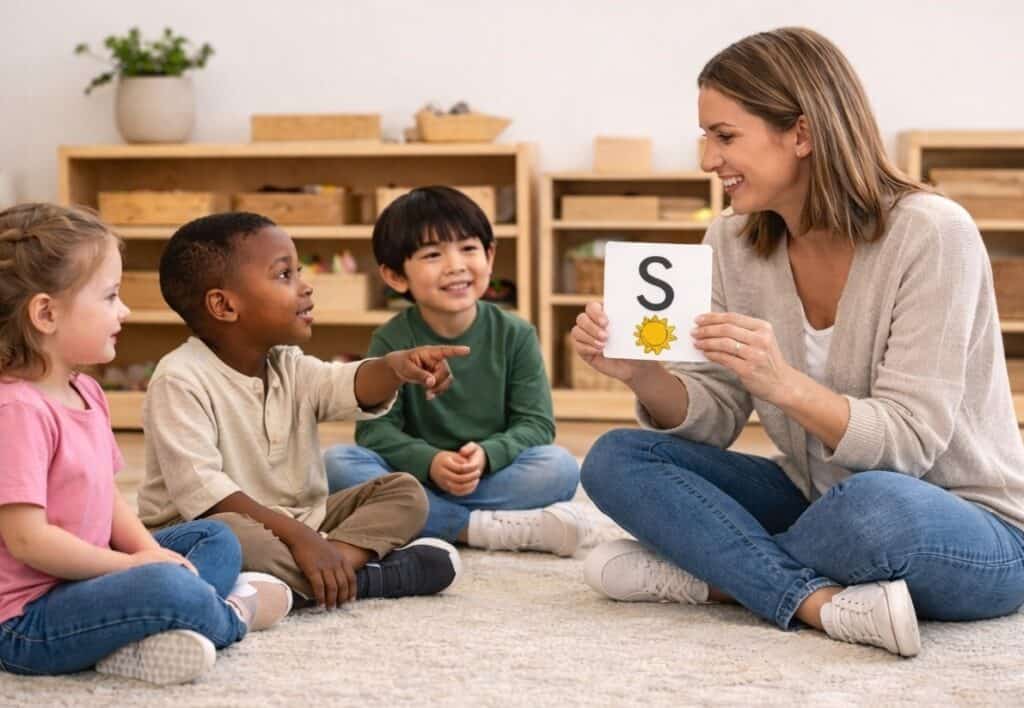
But children also need to listen, follow directions, manage frustration, work with others, and participate in a classroom.
When those skills are in place, learning comes much more naturally.
And if your child is still working on some of these skills, that’s okay.
Development isn’t a race.
Kindergarten Readiness Is About More Than Letters and Numbers
It’s easy to focus only on academic skills like letter recognition and counting, but those are only one part of the picture.
A child can know all their letters and still feel overwhelmed in a classroom.
Real school readiness includes academic, physical, and social-emotional skills working together.
And honestly, many of the skills that matter most can’t be measured on a worksheet.
What surprises many parents is that listening, self-regulation, and problem-solving often matter just as much as early academics.
When children grow in these areas together, they feel more secure, capable, and ready to learn.
Early Literacy Skills Preschoolers Need Before Kindergarten
Early literacy shouldn’t look like pressure or piles of worksheets.
At this stage, children learn through play, conversation, stories, and sound awareness.
Hearing beginning sounds, playing sound games, and noticing that words are made of smaller sounds all help prepare children for reading.
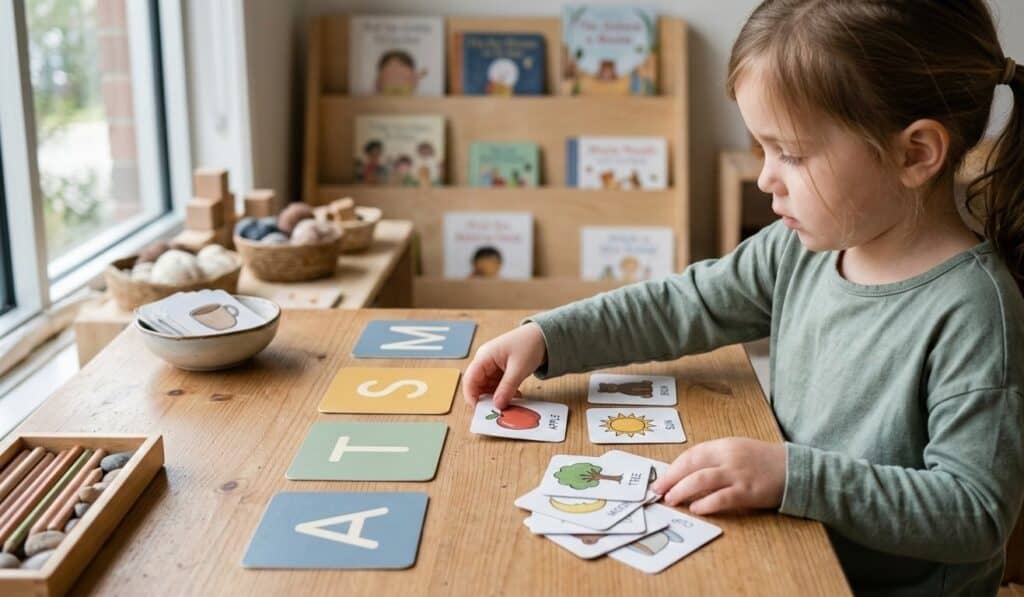
Simple playful activities build those connections far better than memorization.
At the preschool level, literacy is about exploration, curiosity, and confidence — not perfection.
Early Math Skills That Support Kindergarten Readiness
Kindergarten math isn’t about racing to high numbers.
It’s about noticing patterns, understanding quantity, sorting, comparing, and solving simple problems.
When children explore these ideas through hands-on play, they’re developing real math thinking.
These kinds of experiences help children learn how to think through problems.
And that matters much more than rote counting.
Fine Motor Development for Writing Success
Fine motor development is often overlooked, but it plays a big role in school success.
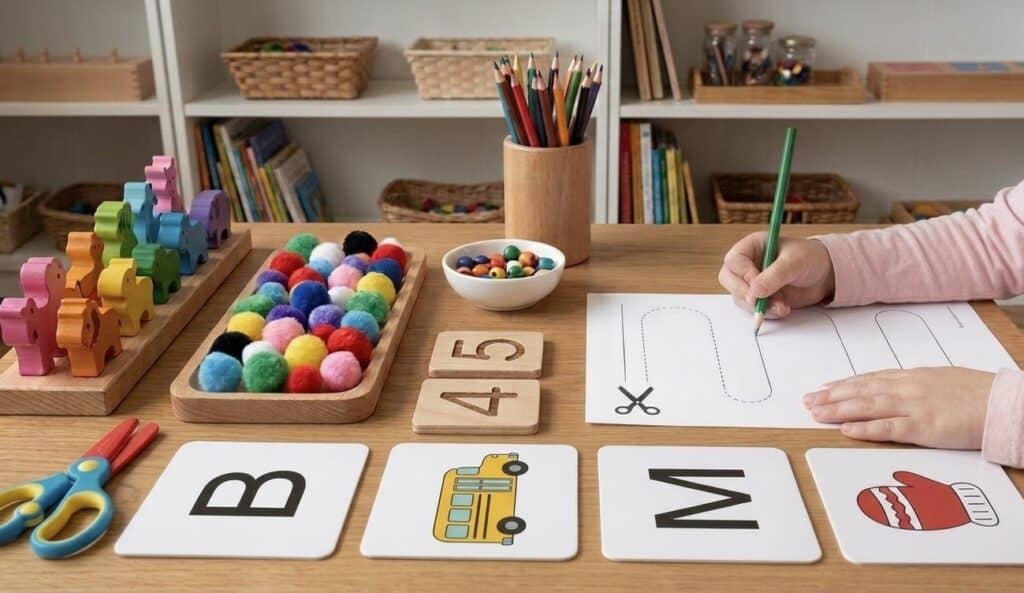
A child may recognize letters but still struggle with writing if their hand muscles tire quickly.
Activities like tracing, cutting, drawing, building, and using small manipulatives help strengthen those muscles.
Strong fine motor skills make writing much less frustrating once kindergarten begins.
Physical development supports learning more than people realize.
Social and Emotional Skills Matter in the Classroom
Social-emotional development may be one of the most important parts of kindergarten readiness.
Children need chances to practice:
- Taking turns
- Listening in a group
- Following multi-step directions
- Managing frustration
- Asking for help
These skills affect how children experience school every day.
Many kindergarten teachers would tell you they’d rather have a child who can listen, wait, and try again than one who has memorized the most flashcards.
When children feel secure socially and emotionally, they’re much more open to learning.
Building a Balanced Preschool Program
The best preschool experiences don’t rush development, and they don’t separate learning into isolated subjects. Instead, they support multiple skills through simple, meaningful activities.
For parents supporting kindergarten readiness at home, this doesn’t require a complicated curriculum. It can happen in everyday moments.
A short circle time can support listening, turn-taking, and following directions while also including a simple letter-sound game. A sorting activity can strengthen early math thinking while also supporting fine motor development.
Building with blocks can support patterns and spatial reasoning. Dramatic play can strengthen language and cooperation. Cutting and tracing can prepare children for handwriting without feeling like formal work.
Balance doesn’t mean doing everything in one day. It means making sure children are growing over time in literacy, math thinking, fine motor skills, and social-emotional development — not just one area.
What You Don’t Need to Stress About
Kindergarten readiness doesn’t mean rushing academics.
Most children do not need:
- Endless worksheets
- Memorizing sight words early
- Academic pressure in preschool
- A preschool day that feels like kindergarten
Young children learn best through play, conversation, and meaningful experiences.
Simple Kindergarten Readiness Checklist
Many children benefit from practicing skills like:
✓ Recognizing some letters and sounds
✓ Counting and sorting objects
✓ Using scissors and crayons with growing control
✓ Following simple directions
✓ Taking turns with others
✓ Managing frustration with support
✓ Asking for help when needed
✓ Listening during stories or group activities
Notice this list includes both academic and non-academic skills — because both matter.
Children don’t need to start kindergarten knowing everything.
They need to arrive ready to learn, ready to try, and ready to participate.
And that kind of readiness is built through far more than ABCs.
Love This? Save It for Later 📌
If this guide was helpful, save it to Pinterest so you can come back to it anytime.
Leave a Reply